You used to be the reliable one, the one who held it together. Now the exhaustion runs deeper than sleep can fix, and the anxiety sits in your chest before the day even starts. Recovery starts with someone who knows exactly what this is. Structured, evidence-based online therapy in English and Spanish, built around your specific situation, with a clear clinical path from the first session.
About
I founded Baseline Psychotherapy in New York in 2019, after a decade living across six countries on three continents: Venezuela, Chile, France, the United States, Singapore, Russia. The reinvention, the invisible exhaustion, the grief you carry while performing competence, I have navigated all of it. I built this practice for professionals, expats, and high performers whose burnout runs deeper than a vacation can fix. The work is evidence-based, cross-cultural, and grounded in neuroscience and emotional intelligence research. My clinical training, detailed below, means the intervention targets the mechanism, not just the symptom.
The School of Positive Psychology of Singapore
This training is the clinical backbone of how every case moves from first contact to measurable change. This training prioritizes structure over intuition: identifying what is maintaining the problem, determining which specific skills will shift it, and tracking whether the intervention is landing. It shapes how sessions are organized, how the therapeutic relationship functions as a clinical tool, and how clients build capacity to act differently in the situations that brought them in. Every assessment-first, outcome-tracked element of this practice traces back to this training.
American Psychological Association (APA)
A specialization in the diagnostic frameworks and clinical profiles of anxiety disorders, mood disorders, and related conditions. This credential sharpens the ability to differentiate between presentations that often overlap: burnout from clinical depression, primary anxiety from stress-driven activation, mood instability from emotional dysregulation. This precision matters most at the assessment stage: ensuring the intervention targets what is actually driving the problem, not just the most visible symptom, determines whether the work produces lasting change.
Duke University School of Medicine, USA
A medical-level neuroscience foundation that bridges mind and body in clinical work. This training covers how the central nervous system organizes attention, arousal, emotion, and recovery, and what happens when those systems sustain prolonged strain. It is the basis for the integrative, somatic dimension of this practice: understanding why burnout is neurophysiological, why anxiety activates the body before it reaches conscious thought, and why sleep disruption, cognitive fatigue, and emotional reactivity connect at the level of neural circuitry. This is what makes the clinical work genuinely integrative.
University of Minnesota, USA
This specialization provides the clinical framework for incorporating complementary approaches alongside standard psychotherapy. The focus is on rigorous decision-making: assessing whether a specific tool is appropriate for a given case, evaluating its evidence base, educating clients about benefit and risk, and measuring whether it produced the intended effect. Guided imagery and mindfulness (covered in depth in this program) are among the most evidence-supported methods for downregulating the nervous system in burnout and chronic stress. Their integration here is grounded in that training.
Instituto de Estudios Psicológicos de España
A postgraduate degree in the science of emotions: how they are generated, how they dysregulate, and how they can be worked with systematically in therapy. This credential forms the foundation for emotion-focused intervention across burnout, anxiety, and depression. It supports the ability to trace emotional patterns to their neurophysiological source (activation, appraisal, relational triggers) and intervene at the correct level. When a client presents with reactivity, emotional shutdown, or chronic overwhelm, this training determines how that pattern is identified, mapped, and systematically changed.
Duke University, USA
Delivering psychotherapy online requires clinical competence in remote assessment, structured video-based interaction, and the ability to conduct evaluations that typically depend on physical presence. This specialization covers the essentials of telehealth delivery: proper session preparation, patient-centered communication, and the neurological screening skills needed to identify cognitive and physiological presentations through a screen. When a client presents with cognitive symptoms, the ability to screen for neurological contributors remotely adds a layer of clinical precision that a standard assessment would miss.
También disponible en español. Sesiones online para hispanohablantes en cualquier parte del mundo.

Approach
Your nervous system needs consistency to rebuild, so the work follows a structure. Each session combines cognitive-behavioral techniques, somatic awareness, and applied emotional regulation, with progress you can measure. The approach adapts to the specific pattern driving your burnout or anxiety: chronic overwork, relational depletion, perfectionism, or sustained high-alert functioning.
We assess symptoms, patterns, history, and physiology to identify what is maintaining the difficulty, so the intervention targets the right mechanisms from the start.
Based on what the assessment reveals, we design a targeted plan drawing from CBT, ACT, and somatic regulation, with clear priorities and a defined direction for each session.
Progress is tracked in observable terms: fewer spirals, better sleep, faster recovery after triggers, more reliable follow-through. If something is not working, we adjust.
Services
Most people arrive knowing something is wrong but not exactly what is driving it. Burnout rarely surfaces alone; it tends to arrive with anxiety, low mood, or a loss of direction that has been building longer than you realize. These are the areas I work with most. If you see yourself in more than one, that is normal, and it is where the assessment starts.
Your system has been running on overdrive for so long that rest alone does not restore it. Exhaustion, irritability, cognitive fog, and a nervous system stuck on alert.
Racing thoughts, tension, hypervigilance, your body stays in alert mode even when there is no immediate threat. The signal has gotten stuck.
Flatness, withdrawal, loss of drive. A system that has shut down to protect itself, now making daily functioning harder than it should be.
Reactions that feel disproportionate, emotional numbness, overwhelm, emotions that run you instead of informing you. Regulation is a trainable skill.
Repeating cycles of conflict, emotional distance, avoidance, or the same argument with different words. The pattern is the problem, and patterns can be mapped.
Relocation, breakups, career shifts, grief, cultural adjustment: rebuilding stability and direction when the ground shifts beneath you.
Pricing
Every session is an individual or couples appointment conducted via secure video. Fees reflect the structure, preparation, and clinical focus that go into every session, before, during, and after. Start with a free 15-minute consultation to see if this is the right fit for you.
Online via Google Meet · 60 minutes
A focused 60-minute session tailored to your specific clinical needs, guided by assessment from day one. For burnout, anxiety, depression, emotional regulation, or life transitions, with expert guidance throughout.
Every session follows a defined structure: review of progress since the last session, a focused clinical target for the current session, practical tools or interventions applied in real time, and a clear direction for what to work on between sessions. You will always know what we are doing and why.
Adults dealing with burnout, anxiety, depression, emotional dysregulation, relationship distress, or life transitions. Sessions are available in English and Spanish, worldwide.
Online via Google Meet · 75 minutes
A structured 75-minute session for both partners. Addresses communication breakdowns, emotional disconnection, recurring conflict patterns, and relationship distress with active clinical facilitation throughout.
Sessions follow a structured format: mapping the interaction cycle, identifying each partner's triggers and protective strategies, practicing de-escalation and repair in real time, and building shared regulation skills that transfer to daily life. Both partners receive clear direction between sessions.
Couples experiencing communication breakdown, recurring conflict, emotional distance, or relocation-related relationship stress. Both partners must be present for every session.
12 sessions · Online via Google Meet · 60 minutes each
Twelve sessions designed as a complete burnout recovery arc. Includes assessment, structured intervention, skill-building, and progress tracking across a defined timeline with measurable goals.
Sessions 1–4 map the clinical picture: stress load, nervous system state, sleep, cognitive patterns, and the demands maintaining the burnout. Sessions 5–12 deliver focused intervention: somatic downregulation, behavioral restructuring, and cognitive work on the patterns that sustain the overload. The final phase confirms that recovery markers are holding under real-world conditions.
Burnout recovery requires sustained intervention across biological, behavioral, and psychological levels. A 12-session commitment ensures the work reaches all three phases, and at $100 per session (vs. $120 individually), the program reflects that commitment with a reduced rate. Payment can be split into two installments: the first at the start, the second at session six.
4 sessions / month · Online via Google Meet · 60 minutes each
Four sessions per month at a sustained pace, once per week. Built for clients working through depression, anxiety, burnout, or ongoing challenges who benefit from consistent weekly clinical support.
Four weekly sessions per month with priority scheduling. Each session follows the same structured format: defined focus, progress tracking, and practical direction. After every session, you receive a written summary documenting what was covered, what was identified, and what to focus on before the next session. This is clinical documentation designed for you, a tool for continuity and self-tracking.
Clients who have completed assessment and are in active intervention, or those in sustained recovery who benefit from weekly structure. The monthly commitment ensures the work builds consistently, which is critical when addressing burnout, anxiety, depression, or relational patterns. At $107.50 per session (vs. $120 individually), the plan rewards consistent engagement. Billed monthly.
For Teams & Organizations
Evidence-based group training designed for real work environments. Grounded in international occupational health standards, including WHO workplace mental health guidelines and psychosocial risk frameworks.
A structured training program covering the neurophysiology of workplace stress, early identification of burnout risk, and practical regulation strategies teams can apply the same day. Built for organizations that take psychosocial risk seriously.
How chronic workplace stress becomes burnout at a neurophysiological level, and how to identify early warning signals before performance and health deteriorate. Practical regulation techniques for high-pressure environments. Communication frameworks that reduce interpersonal friction and prevent escalation. How to build sustainable recovery habits within a demanding work culture.
Available as a half-day or full-day session, online or on-site. Designed for teams of 8–30 participants. Each session combines psychoeducation with applied exercises and a structured takeaway toolkit. Custom formats available for leadership teams, HR departments, or organization-wide implementation. Aligned with psychosocial risk assessment best practices for organizations meeting ISO 45003 or equivalent compliance requirements.
Published Work
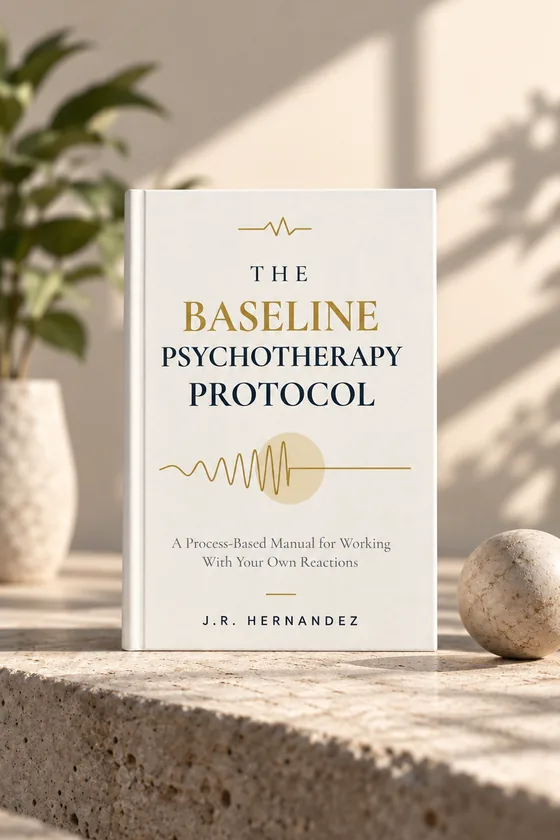
Two books on emotional intelligence: a practical guide for adults navigating stress, anxiety, and low mood, and a story that teaches young children what emotions are and why they matter. Available in English and Spanish on Amazon.
A 10-step guide to understanding and managing stress, anxiety, and depression through emotional intelligence and cognitive-behavioral strategies. Each step is structured, practical, and designed for independent application. Available in English and Spanish.
A story for young children about what emotions are, where they come from, and why every one of them matters. Designed for parents who want to give their children an early foundation in emotional intelligence, because regulation is a skill that builds over a lifetime. Available in English and Spanish.
Client Reviews
Clients who came looking for structure, clarity, and a therapist willing to be direct about what the work requires and what it delivers.
"He invited me into a safe space where I could articulate the complex emotions I have been experiencing during this difficult season. He is professional but also like a trusted friend, caring, open, and non-judgmental, which made me feel secure in confiding in him. Using guiding questions, he walked me through a deeper search into why I view situations from certain perspectives. Following the session, he sent a summary report covering all areas discussed, including advice on steps to gain clarity and identify the actual root cause of my challenges."
Google Reviews
"Super professional, he took the time to listen to me and provide guidance to face concerns that caused me anxiety and stress. He helped me identify and put into words those intrusive thoughts that affected my peace of mind and mental health."
Google Reviews
"I visited this counselor when I was in Singapore by recommendation and I liked his way of working so much that I continue to do online therapy with him even when I left the country."
Google Reviews
"It has been one of the most rewarding journeys of self-discovery I have ever had. At first I was reluctant to do online sessions, but after a couple of sessions I found it even more convenient than in-person sessions."
Google Reviews
"A few years ago I approached him when I was struggling with anxiety... Recently, I returned after going through the end of a decade-long relationship, and he helped me better understand my emotions, process the situation in a healthier way, and focus on what I can control moving forward."
Google Reviews
"I've had therapy before both in Singapore and abroad and I can say that my experience with JR is by far the best I've ever had. His approach to therapy is very practical, his methods really helped me get better and track my progress and see how far I got."
Google Reviews
"The best therapist I have ever had. Always available, supportive, and insightful, with a sense of humour that makes even difficult conversations feel comfortable. As someone from different cultural backgrounds, I appreciate how understood and respected I feel during our sessions."
Google Reviews
"He has helped me understand why I behave the way I do and how to actually deal with it. We have tackled work burnout, improved my relationships, and dug into real self-discovery. He always meets you where you are and keeps things moving in the right direction."
Google Reviews
FAQ
Stress is a response to specific external demands: a deadline, a difficult conversation, a packed schedule. It typically eases when the pressure lifts. Burnout is what happens when that stress becomes chronic and unrelenting. The World Health Organization classifies burnout as an occupational phenomenon characterized by emotional exhaustion, detachment, and reduced effectiveness. Unlike temporary stress, burnout does not resolve with a weekend off or a vacation. It requires deliberate intervention to interrupt the cycle. Therapy for burnout addresses both the symptoms and the underlying patterns that allowed the exhaustion to accumulate in the first place.
Yes. Research consistently shows that online therapy produces comparable outcomes to in-person sessions for conditions including burnout, anxiety, and depression. The effectiveness depends on the therapeutic approach and the therapist's expertise, not the delivery format. Online therapy for burnout offers additional practical advantages: no commute, access across time zones, and the ability to attend sessions from a private space without disrupting a demanding schedule. For global professionals and expats, online therapy removes the geographic barrier entirely. At Baseline Psychotherapy, sessions are conducted via secure video with the same clinical structure as an in-person appointment.
Evidence-based approaches with the strongest support for burnout and anxiety include cognitive-behavioral therapy (CBT), acceptance and commitment therapy (ACT), and integrative methods that incorporate nervous system regulation techniques. CBT helps identify and restructure the thought patterns that maintain burnout cycles. ACT builds psychological flexibility so you can engage with difficult emotions without being controlled by them. Nervous system-focused work addresses the physiological dimension, the chronic activation that keeps your body in a stress response even when the external pressure has eased. At Baseline Psychotherapy, the approach integrates these frameworks based on your specific clinical presentation.
Burnout recovery timelines vary based on severity, how long the burnout has been building, and the individual's circumstances. Many clients begin noticing meaningful shifts within eight to ten sessions: improved sleep, reduced anxiety, and clearer thinking. Deeper structural change, including rebuilding sustainable work patterns and addressing the core vulnerabilities that led to burnout, typically unfolds over three to six months of consistent therapy. The Burnout Recovery Program at Baseline Psychotherapy is designed as a 12-session arc specifically because that timeframe allows for both symptom relief and lasting behavioral change that prevents recurrence.
No. Burnout is classified by the World Health Organization as an occupational phenomenon, not a formal psychiatric diagnosis. You do not need a referral or a prior diagnosis to begin therapy. Many clients come to therapy recognizing that something is wrong (persistent exhaustion, emotional numbness, anxiety that will not ease) without having a clinical label for it. The initial sessions involve a thorough clinical assessment that clarifies what is happening, identifies the driving factors, and establishes a clear treatment direction. A formal diagnosis is neither required nor the goal. The goal is functional recovery.
Yes, and most clients do. The goal of burnout recovery therapy is not necessarily to stop working, it is to change the internal and external patterns that made the work unsustainable. Sessions focus on identifying where your boundaries have collapsed, what cognitive patterns are driving overextension, and how to rebuild capacity without requiring a complete life overhaul. For many professionals, stepping away is not realistic. Therapy works within that reality, building skills for sustainable functioning in your current environment while making targeted changes that reduce the conditions maintaining your burnout.
Absolutely. All sessions at Baseline Psychotherapy are conducted through encrypted, secure video platforms that comply with professional telehealth standards. Your session content, personal information, and the fact that you are in therapy are held in strict confidence. Confidentiality is a foundational clinical and ethical obligation. The only exceptions are the standard limits of confidentiality that apply to all psychotherapy: imminent risk of harm to yourself or others. These limits are discussed clearly in the first session. Working with a private practice rather than a large platform means your information is not shared with third-party systems.
Baseline Psychotherapy serves clients worldwide, and scheduling across time zones is a routine part of the practice. Sessions are booked at times that work for your schedule, regardless of where you are located. All you need is a stable internet connection, a private space, and a device with video capability. Many clients are expats, international professionals, or individuals in locations where access to a qualified therapist (especially one who works in both English and Spanish) is limited. Online delivery eliminates that barrier while maintaining the full clinical rigor of a structured therapeutic session.
Get Started
If you have been running on fumes and know something has to change, the next step is a conversation, not a commitment. Reach out on WhatsApp to book your free 15-minute consultation. No referral, no waitlist, no intake form. You will hear back directly from J.R. Hernandez.