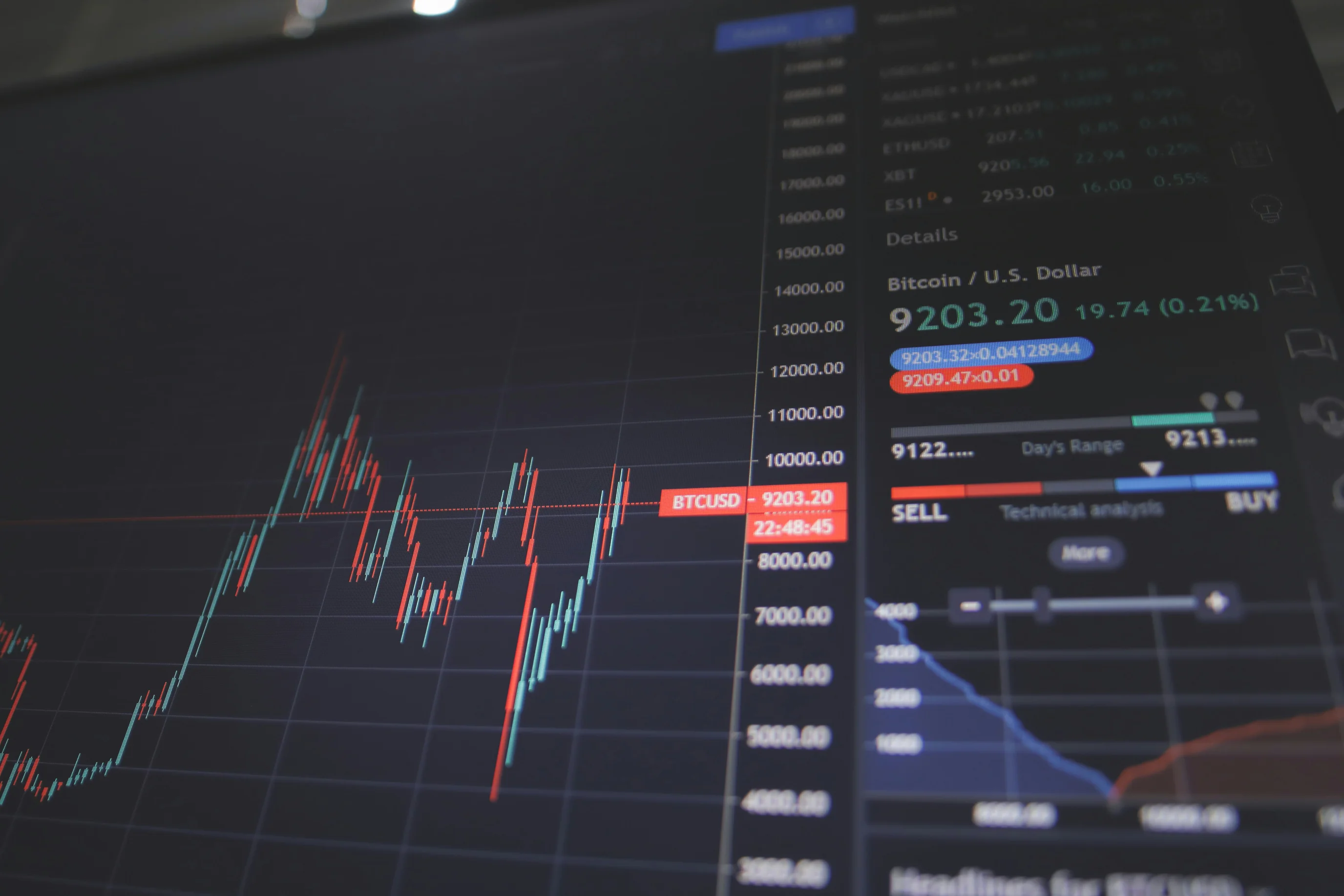
It is 4:40 in the morning and you are already awake, and you know exactly why. Your hand finds the phone before your eyes are fully open. Futures. The overnight session. The position you left on. Twenty minutes later you are showered, sharp, and composing yourself into the person your desk expects: fast, precise, unbothered. Your numbers are good. Your reviews are good. Nobody at work would ever describe you as anxious.
That is precisely the problem. In most careers, anxiety degrades performance until someone notices. In finance, anxiety and performance can run on the same fuel line for years. The vigilance that wakes you at 4:40 is the same vigilance that catches the error in the model before anyone else does. So the symptom gets promoted, the person gets depleted, and by the time something visibly breaks, it has been building in silence for a long time.
In brief: finance manufactures anxiety through four mechanisms (a live score of your worth, full accountability for partly external outcomes, a yearly verdict, and a culture that calls the strain normal); high-functioning anxiety is the version that drives performance instead of stopping it; the symptoms get filed as the price of the job; discipline makes it worse; and structured, assessment-driven treatment removes the tax without touching the edge. A checklist and the GAD-7 screener are below.
Why Does Working in Finance Produce So Much Anxiety?
Every high-pressure career produces stress. Finance produces a particular architecture of it, for reasons built into the job itself.
First, your performance is a number, updated constantly. Very few professions score their people daily, in public, with decimals. A surgeon has bad outcomes; a lawyer loses cases. But neither watches a live ticker of their own worth. When your P&L is visible to your desk, your manager, and yourself in real time, self-esteem stops being an internal process and becomes an external data feed.
Second, the outcomes are only partly yours, but the accountability is fully yours. Markets move on central banks, wars, and rumors. You can do everything right and lose. Your nervous system does not process that nuance: it registers threat, assigns blame inward, and stays on guard. Psychology calls this an internal attribution of external events, and it is one of the most reliable engines of chronic anxiety.
Third, the compensation cycle concentrates a year of output into a handful of conversations. Months of work compress into a bonus number that is read, by everyone including you, as a verdict on your value. Anticipating a verdict for months at a time is a textbook anxiety condition.
And finally, the culture metabolizes all of this as normal. If you are not stressed, you are not paying attention. Admitting strain reads as risk: to your book, to your seat, to your reputation. So nobody says anything, and everyone assumes they are the only one running hot.
What Is High-Functioning Anxiety?
High-functioning anxiety is a descriptive term rather than a formal diagnosis, and the pattern it names is real: significant anxiety symptoms coexisting with intact, often elevated, performance. The anxiety does not stop the person from functioning. It drives the functioning.
The overpreparation reads as diligence. The hypervigilance reads as attention to detail. The inability to relax reads as work ethic. Colleagues see a machine; the machine experiences dread on the commute, a jaw that never unclenches, and a mind that treats every quiet moment as an unmonitored risk.
What makes this version of anxiety so persistent is that success keeps disproving the problem. Every good quarter becomes evidence that nothing is wrong: clearly I am fine, look at my numbers. The performance becomes a wall between the person and their own warning signals. In clinical work with finance professionals, this is the sentence I hear most often, in one form or another: "I do not have anxiety. I am just wired for this." Sometimes that is true. The way to know is to look at what the wiring costs outside the office.
What Are the Symptoms of High-Functioning Anxiety in Finance?
These are the signals that get explained away as the price of the job.
Sleep That Tracks the Market
Waking at 3 or 4 AM without an alarm. Checking positions before checking on the people next to you. Sleep that is technically happening but never feels like rest.
Mood Pegged to P&L
Green days produce euphoria; red days produce a level of self-attack no colleague would be allowed to speak to you. When your emotional state is indexed to a number you do not fully control, you have outsourced your mood to volatility.
Irritability at Home
The composure is spent at work. What your partner and family receive is the leftovers: a shorter fuse, a distracted presence, a person physically home and mentally in the after-hours session.
A Body Keeping Score
Tension headaches, gut problems, chest tightness, a resting heart rate that has quietly climbed. Anxiety is a sustained physiological state as much as a thought pattern, and the body invoices it; Bruce McEwen's work on allostatic load (New England Journal of Medicine, 1998) describes that accounting in detail.
The Drink That Became Structural
The line between unwinding and self-medicating is crossed gradually, and in finance culture it is crossed with company. The same goes for the stimulant creep on the other end of the day.
The Inability to Be Off
Vacations with a terminal nearby. Weekends spent pre-living Monday. Rest starts to feel unsafe, because vigilance has become the only position that feels hedged.
Any one of these, alone, can be a rough patch. Several of them, sustained for months, is a pattern. Patterns do not resolve by themselves; they consolidate.
The finance anxiety checklist
Seven quick checks, one line each, from the six symptoms above. If several are true this quarter, the vigilance has stopped being an edge and started being a cost, and the cost is being charged to accounts you are not watching.
- You wake before the alarm and check positions before you check anything else.
- Your mood for the day is set by the first number you see.
- The people at home get the version of you that is left after the close.
- Your resting heart rate, jaw, or gut have been telling you something for months.
- The drink or the stimulant has moved from optional to structural.
- Rest feels unsafe, so you keep a terminal within reach on holiday.
- Your reviews are excellent and you have told nobody any of this.
Put a number on it
The GAD-7 is the standard anxiety screener. Seven questions, two minutes, scored privately in your browser, nothing stored. A score is harder to argue with than a good quarter.
Take the GAD-7 Anxiety Test →Why Can't You Discipline Your Way Out of Anxiety?
The trap specific to high performers: the skill set that built your career is the wrong tool for this problem, and applying it harder makes the problem worse.
The professional toolkit is control: more analysis, more preparation, more hours, more monitoring. Applied to markets, that toolkit produces edge. Applied to your own mind, it produces amplification. Monitoring anxiety increases the signal. Treating your inner state like a position to be managed puts you in a permanent risk-management posture toward yourself, which is, functionally, more anxiety.
White-knuckle discipline does work for a while. That is what makes it dangerous. Suppression is expensive, the cost compounds, and the account it draws from (sleep, relationships, health) is exactly the one you are not watching. Most finance professionals do not seek help when the strategy starts failing. They seek help when it fails suddenly: the panic attack on the floor, the health scare, the relationship ultimatum. The clinical goal is to get there before that moment, while the intervention is still small.
Is It Anxiety or Burnout, and Can It Be Both?
The two get used interchangeably, but they are different states with different treatments. Anxiety is overactivation: a threat system running hot. Burnout is depletion: the state a system reaches after running hot for too long. If you are unsure which one you are looking at, the distinction matters, and I have written a full breakdown of how burnout differs from depression that walks through it.
In finance, the pipeline from one to the other is short. Years of high-functioning anxiety are the standard on-ramp to burnout, and by the time exhaustion and detachment show up, both conditions usually need attention. Structured burnout therapy addresses the depletion; the anxiety underneath is what has to change for the recovery to hold.
What Treatment Works for Anxiety in High Performers?
The same profile that makes finance professionals resistant to seeking therapy makes them exceptionally good at it once the format fits. What fits is structure.
Evidence-based therapy for anxiety, primarily cognitive behavioral work, which carries the strongest evidence base for anxiety disorders (Hofmann and colleagues, 2012), is assessment-driven rather than an open-ended conversation about your childhood: identify the specific mechanism maintaining the anxiety, target it with defined techniques, measure whether it is changing. Clear scope, defined goals, observable outcomes. Most clients with a focused presenting problem see meaningful change within eight to ten sessions. That is a format a performance-oriented mind can respect and use.
The work typically covers three fronts: the physiological (retraining a nervous system that has forgotten its baseline), the cognitive (the attribution and catastrophizing patterns that convert market noise into personal verdicts), and the structural (the boundaries between you and the ticker that make recovery possible). None of it requires you to perform worse. Done right, it removes the tax you are currently paying on every unit of performance. I have written more about how this works for driven professionals specifically.
How Does Therapy Fit Around Market Hours, Discretion, and Cost?
Three obstacles keep finance professionals out of therapy, and all three have practical answers.
Discretion. Working online with a therapist based abroad means complete separation from your firm, your city, and your professional network. No office lobby, no local grapevine, nothing routed through anyone you know.
Schedule. Sessions are scheduled around market hours, not inside them. Early mornings, evenings, and weekends exist precisely for calendars like yours, across time zones.
Cost. A structured 60-minute session costs $120 USD, less than half of the rates commonly listed in New York. The clinical structure is the same: assessment-driven, evidence-based, with defined goals. The difference is that you are not paying for a therapist's rent on Park Avenue.
Frequently Asked Questions
Is constant anxiety just part of working in finance?
Pressure is part of the job. A sustained anxiety state is not, even when the culture treats it as standard equipment. The practical marker is cost outside of work: if sleep, relationships, or your health are paying for your performance, that is not the job anymore. That is a pattern worth treating.
How do I know if what I have is anxiety or burnout?
Anxiety feels like too much activation: racing thoughts, tension, dread, vigilance. Burnout feels like depletion: exhaustion, detachment, nothing left. In finance careers they typically arrive in sequence, anxiety first, and often need to be addressed together. A proper assessment sorts this out in the first sessions.
Can a therapist actually understand a trading career?
It is the right question to ask, because spending your sessions explaining what a drawdown is helps nobody. Look for a therapist with clinical experience treating finance and other high-pressure professionals. You should be able to talk about comp cycles, desk culture, and P&L-linked mood in your own language and be understood the first time.
Will treating my anxiety make me less sharp on the desk?
No, and the fear is worth taking seriously because it keeps many people from starting. The vigilance that catches errors and the anxiety that wakes you at 4:40 feel like the same thing from inside; they are not. Treatment targets the part that runs when there is nothing to monitor, the part that costs sleep, relationships, and health, and leaves the attention and speed that the job actually requires. Clients consistently report that their work improves, because a nervous system that can switch off recovers, and a recovered system makes better decisions than a depleted one.
High-functioning anxiety in finance is a treatable clinical pattern that hides behind good numbers, whatever the culture says about character or the price of ambition. Treatment leaves your care for performance exactly where it is and removes the tax you are currently paying on every unit of it.
Get Started
If any of this described your last six months, the next step is small: a free 15-minute consultation. You describe what is happening, I tell you honestly whether and how I can help, and you decide. No commitment, and no one in your world needs to know.
Book a Free 15-Min Consultation
Found this useful? You can set this site as a preferred source on Google: